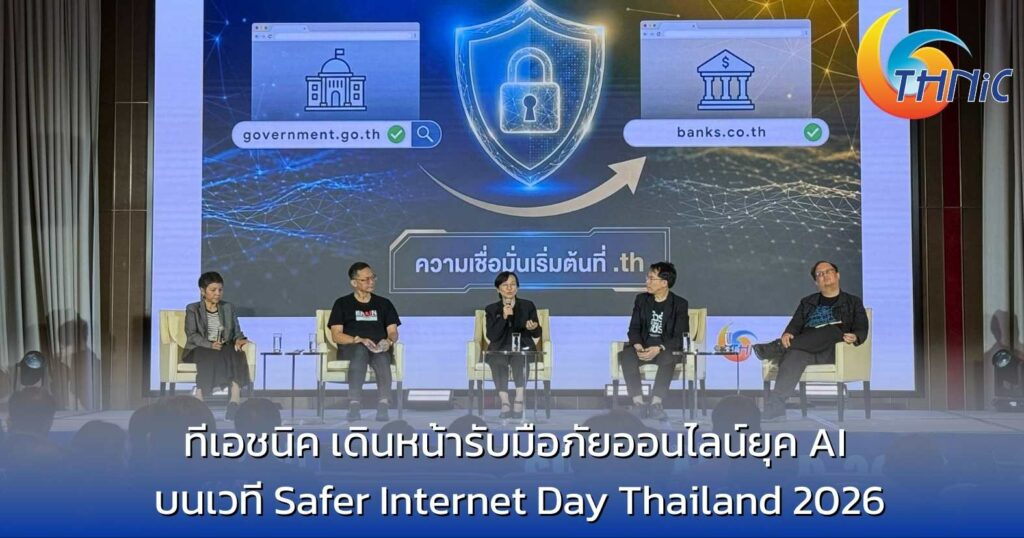
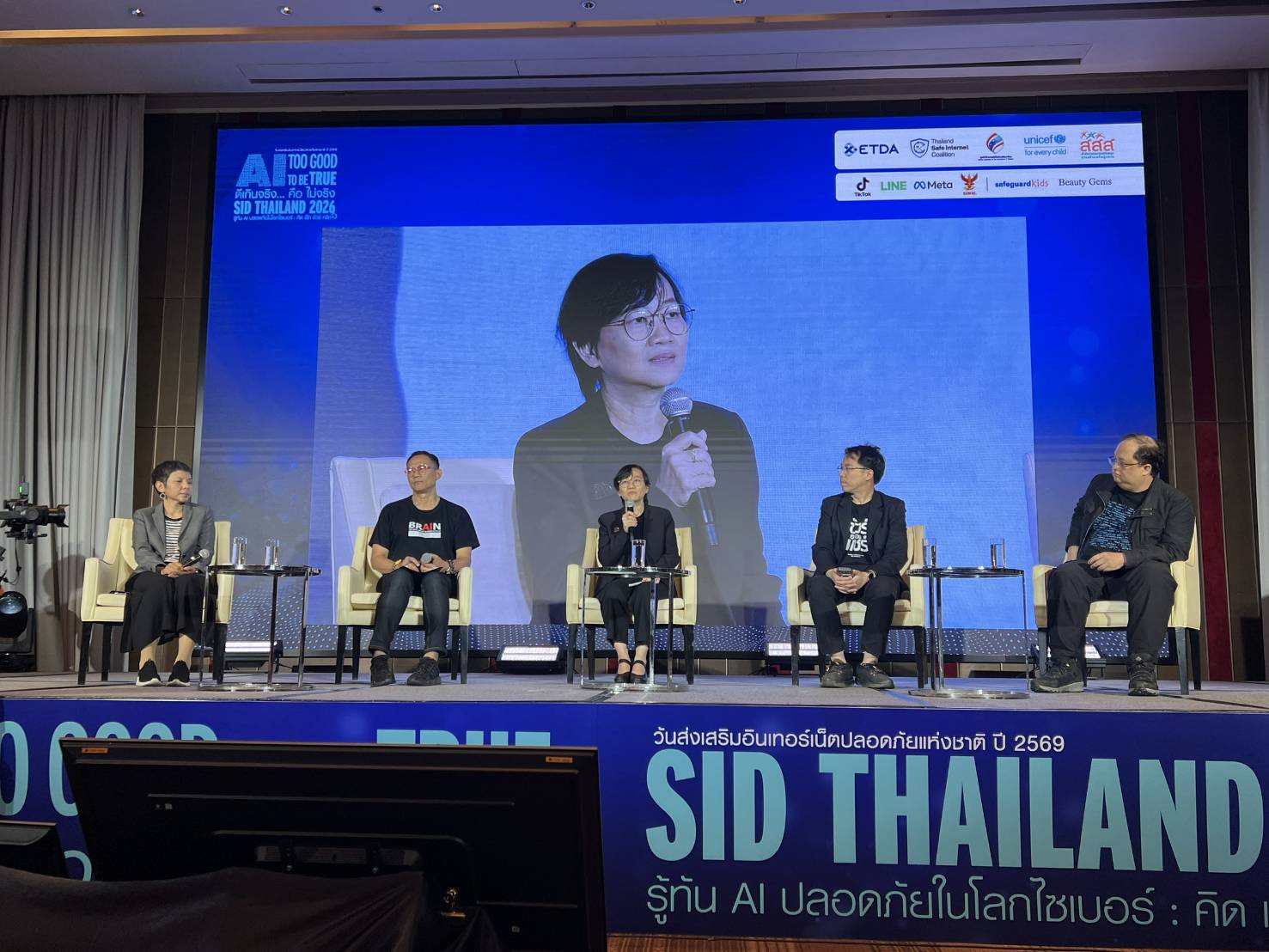
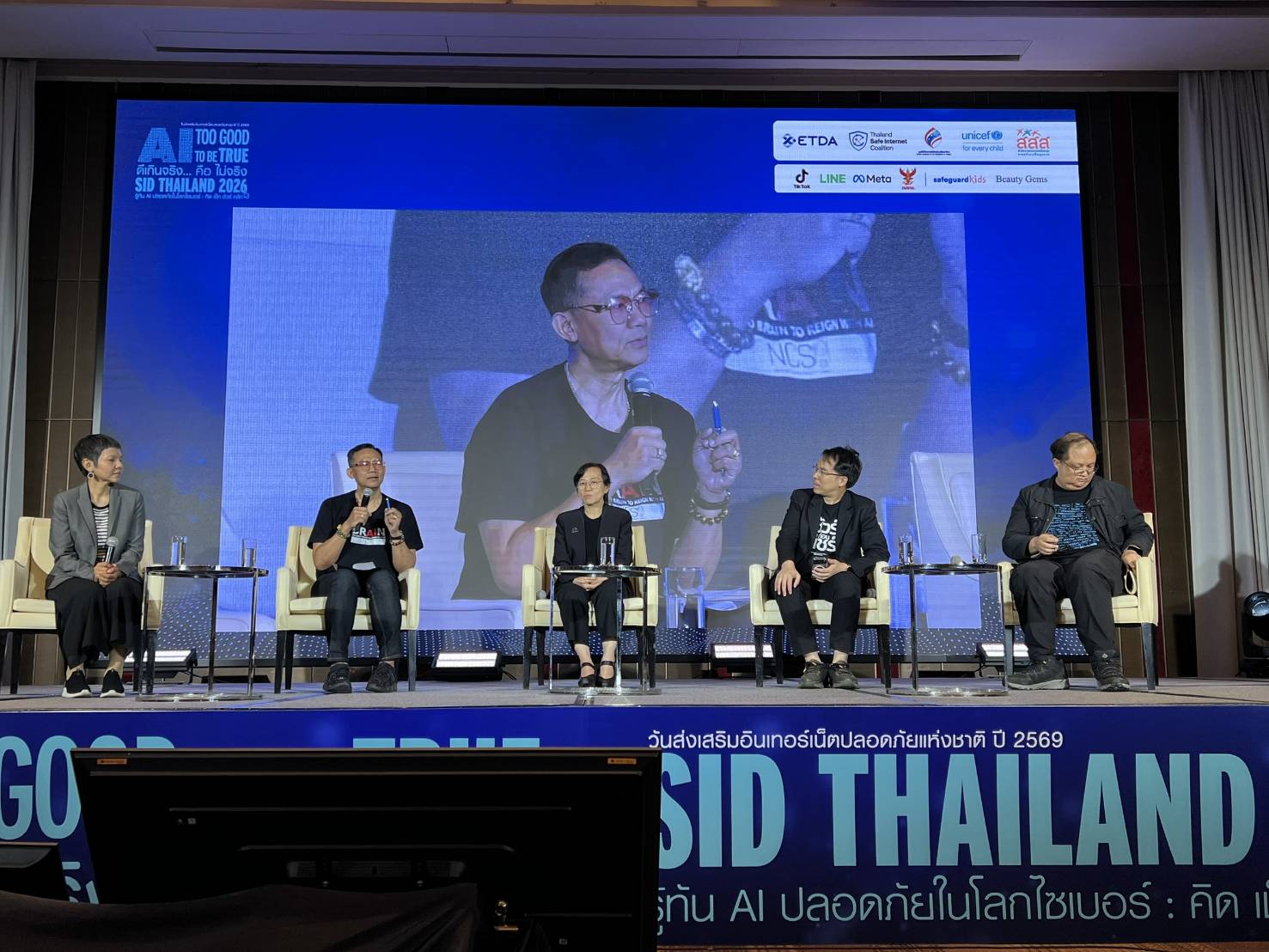
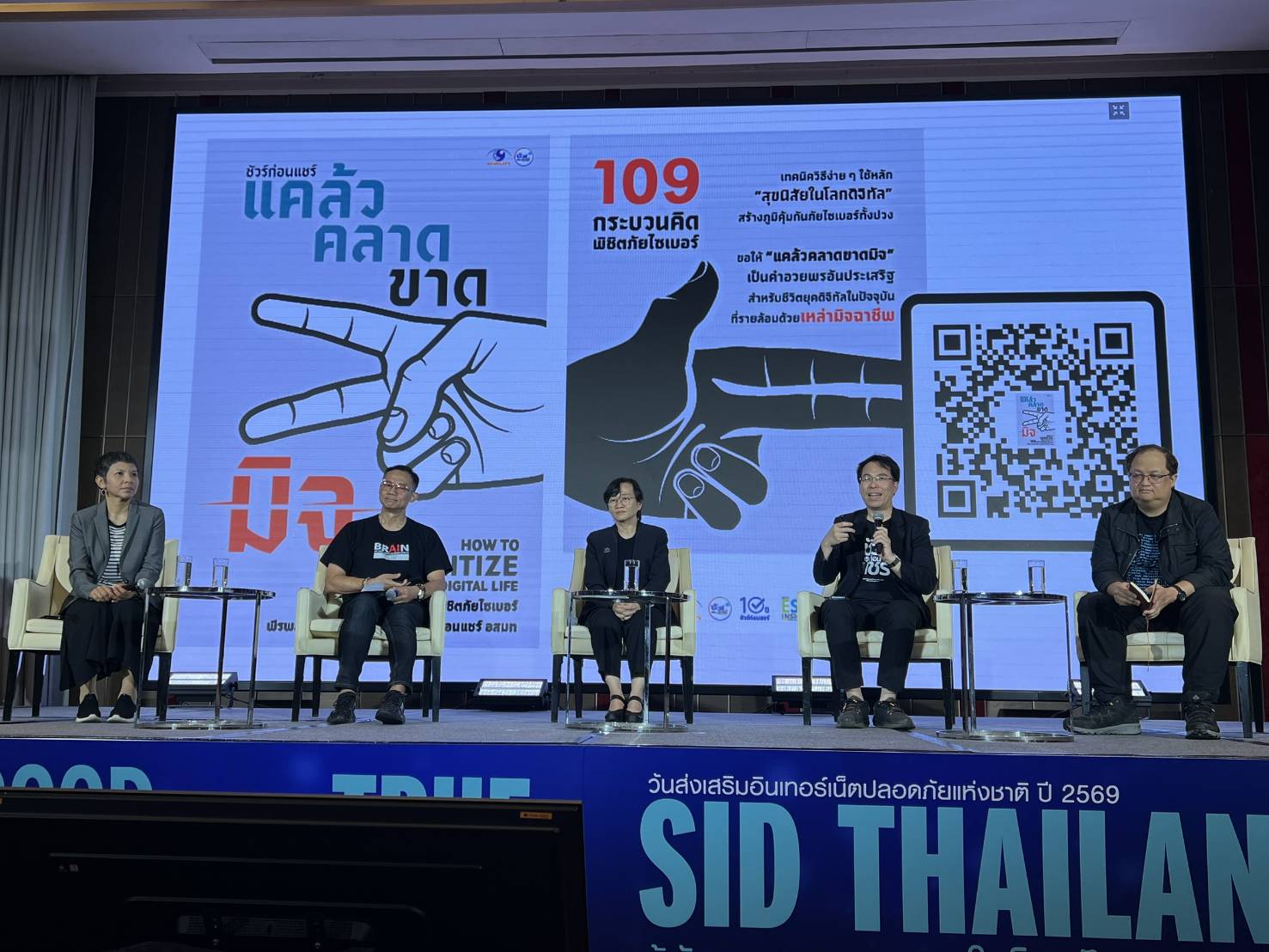
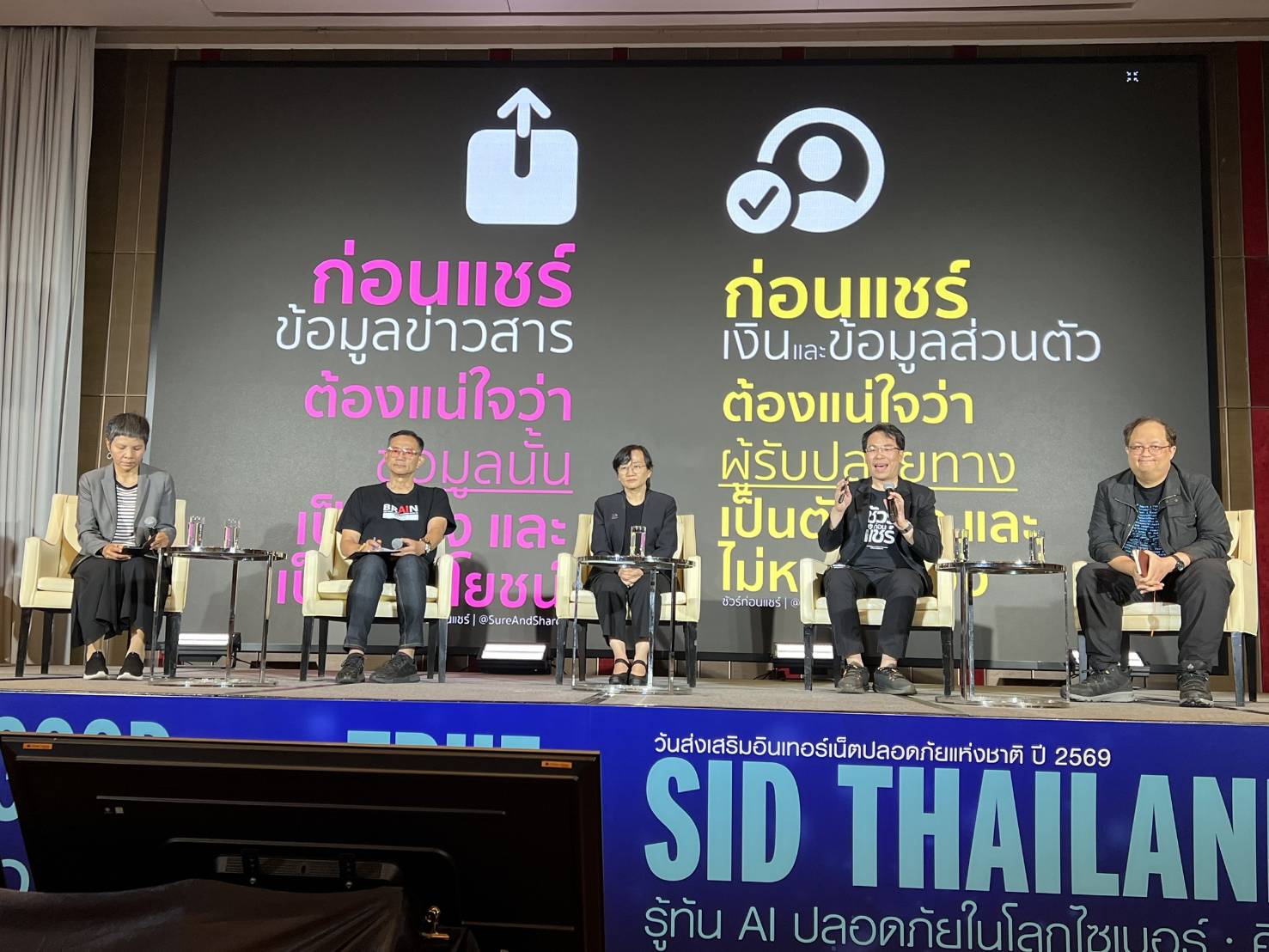
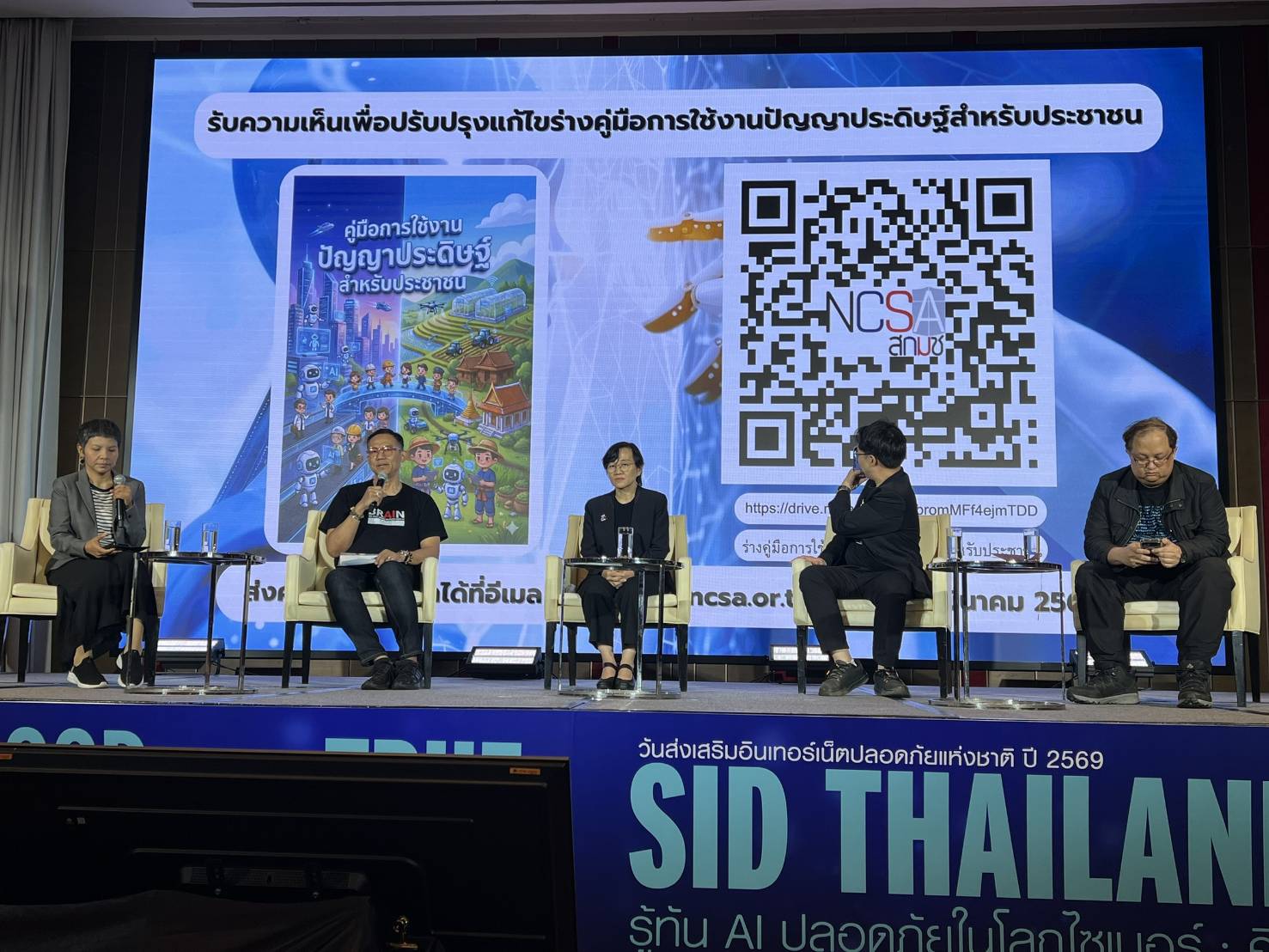
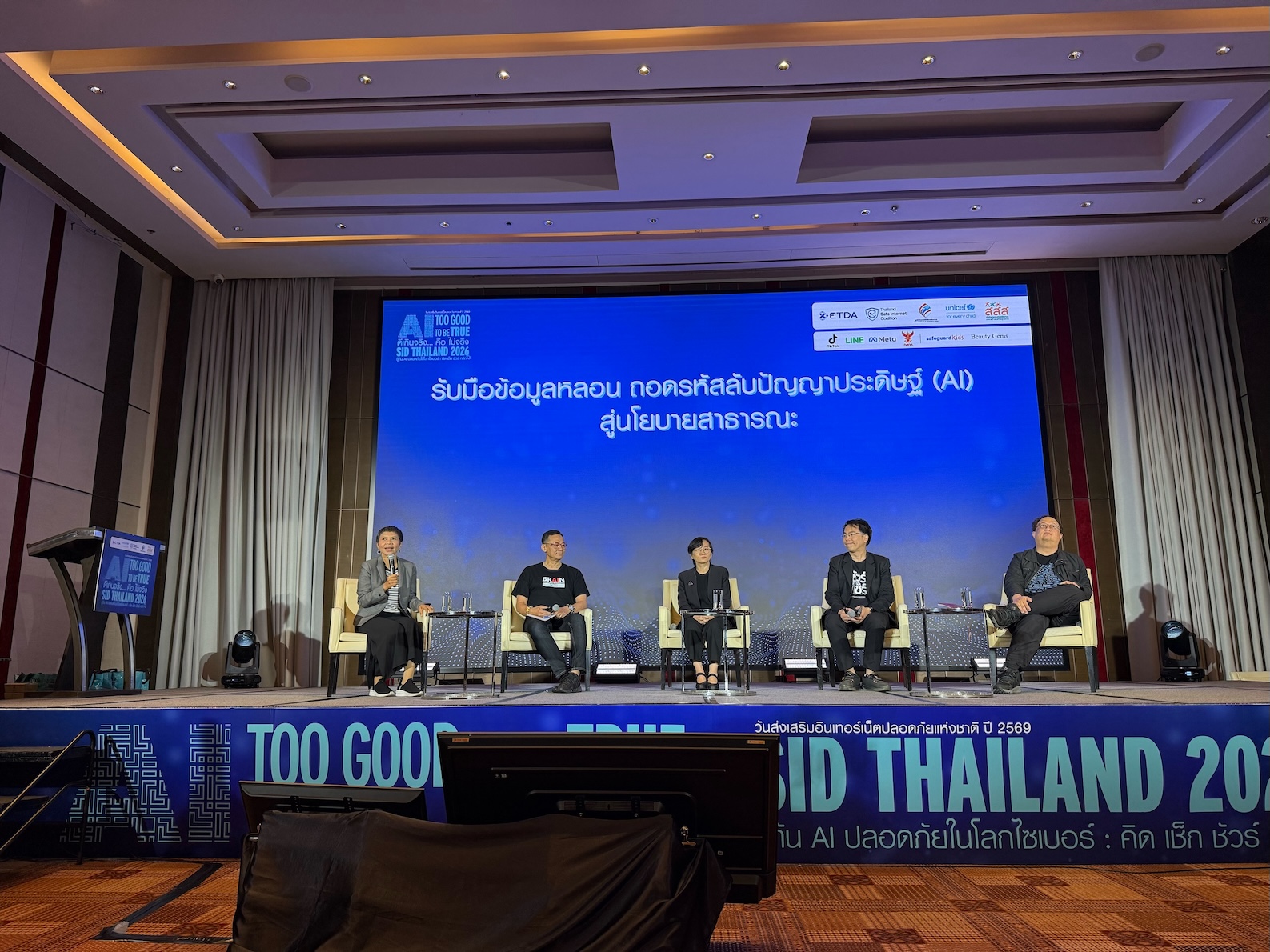
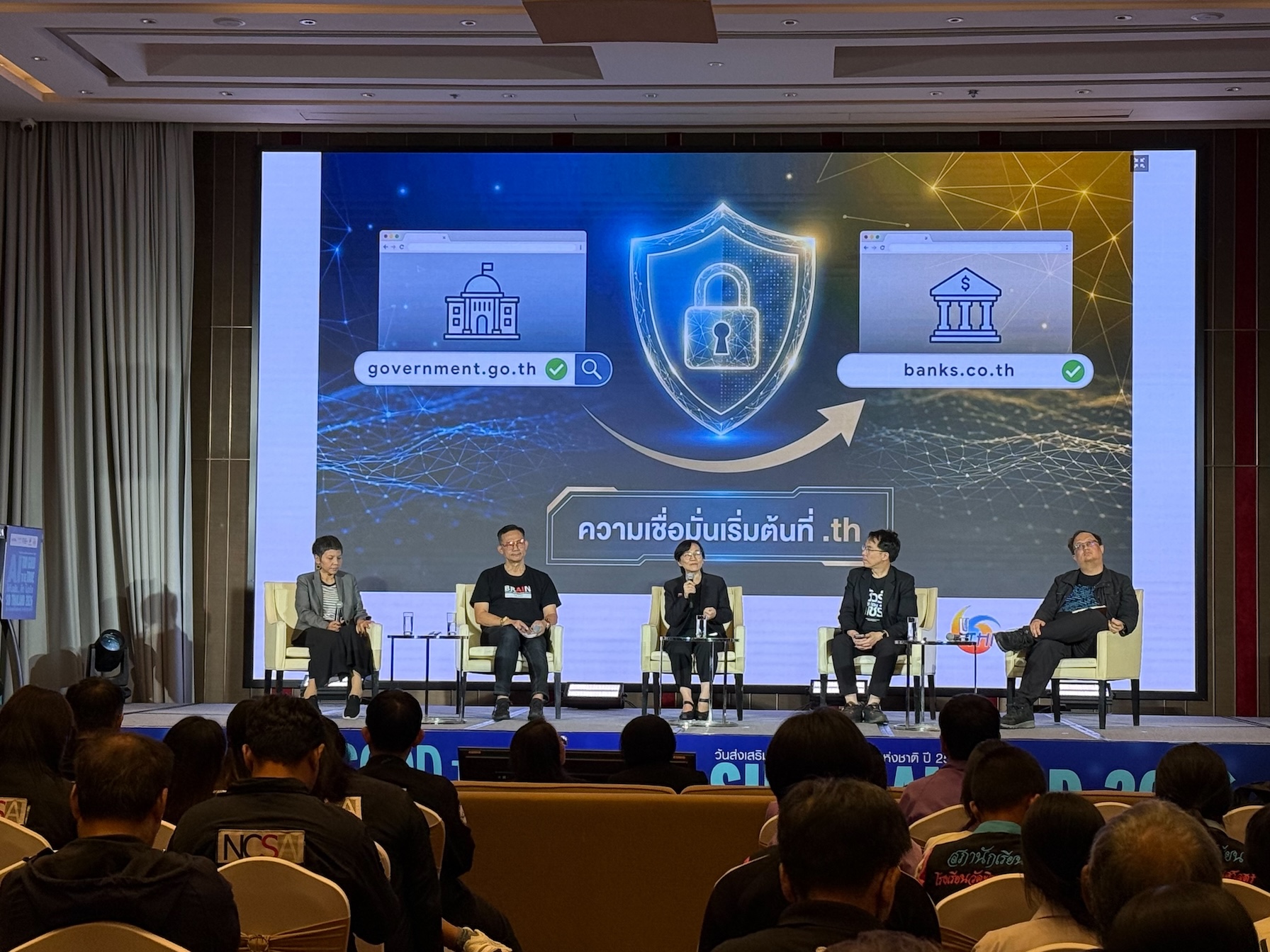
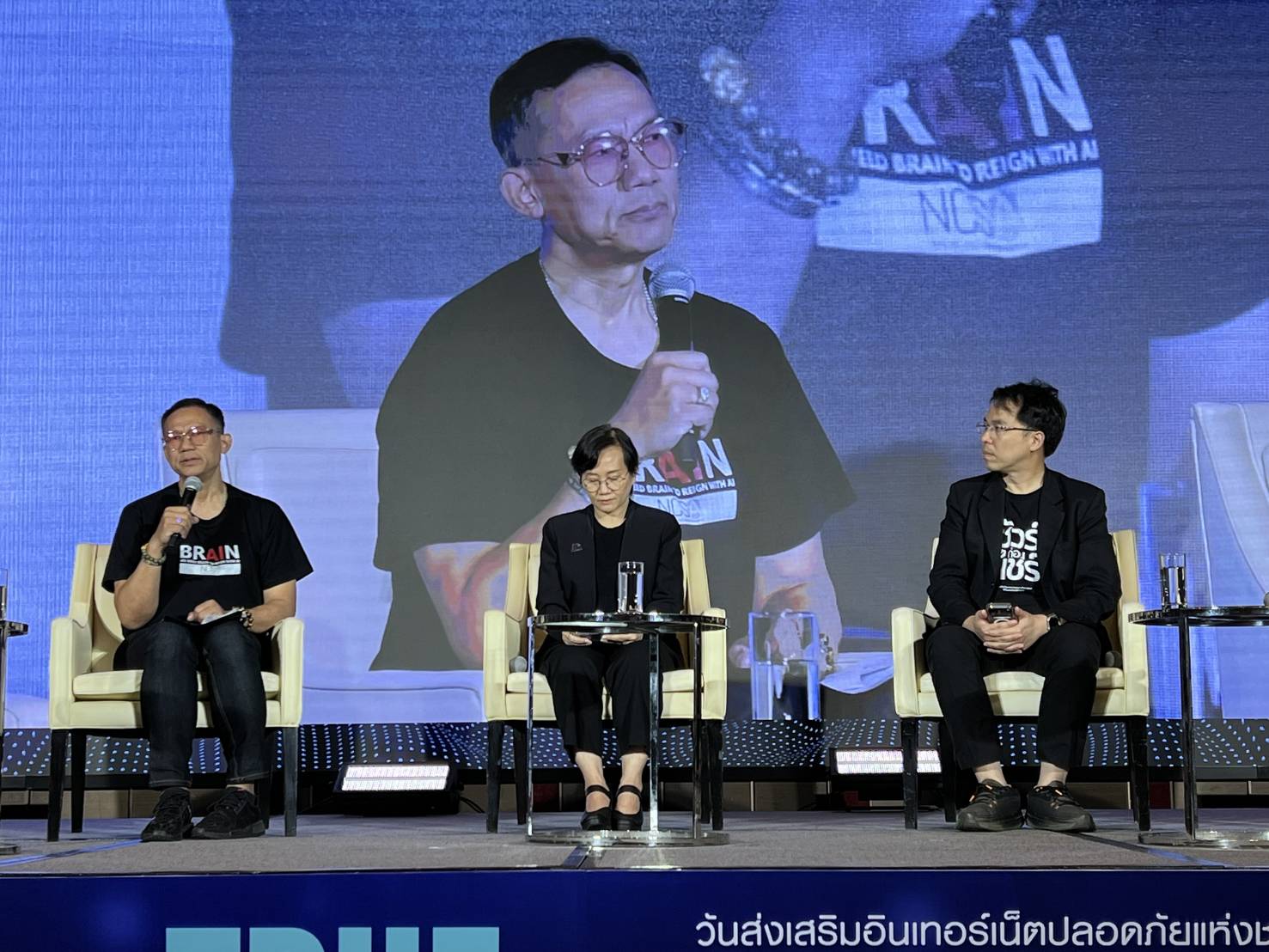
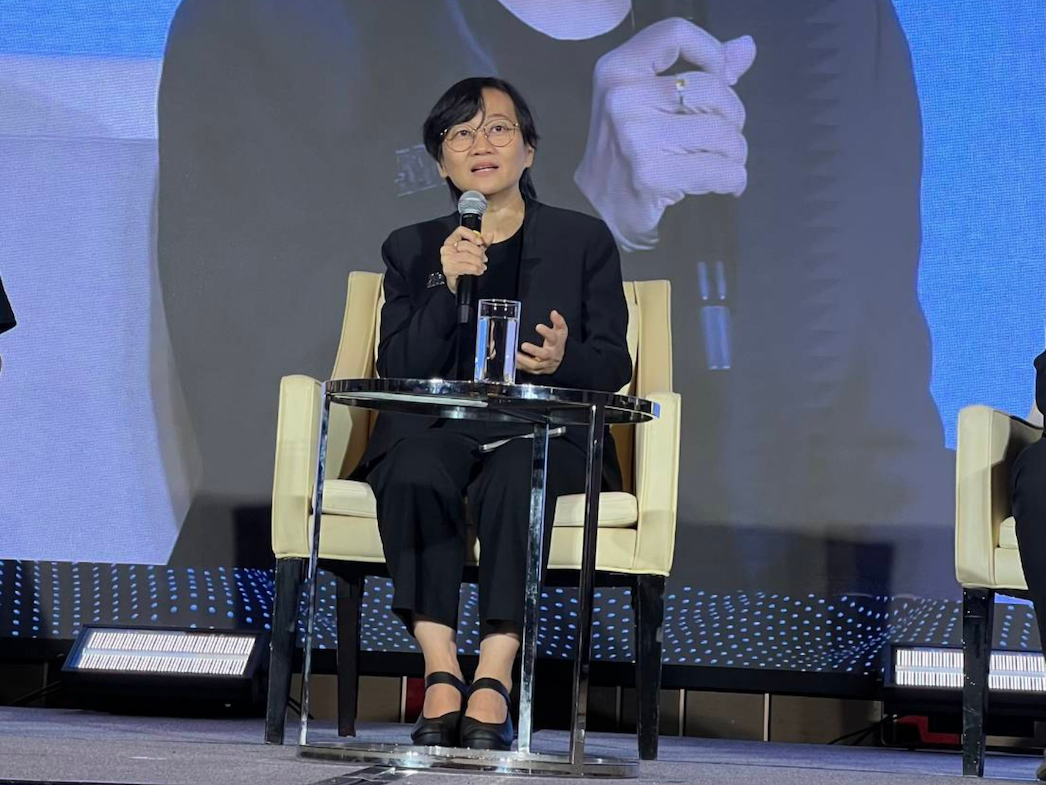
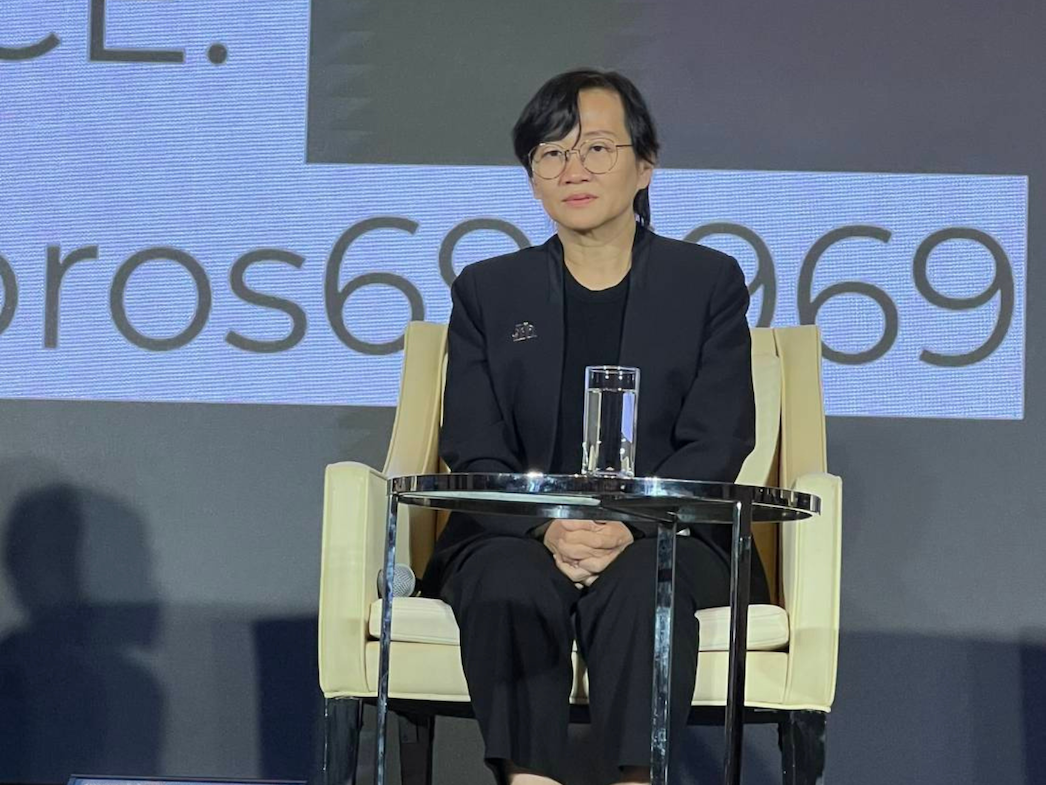
On February 10, 2026, Dr. Pensri Arunwatanamongkol, Executive Director of the Thai Network Information Center Foundation (THNIC), participated in a panel discussion titled “Combating Deceptive Information: Decoding Artificial Intelligence (AI) for Public Policy” at Safer Internet Day Thailand 2026, held from February 9–10, 2026, at Eastin Grand Hotel Sathorn.
Online threats in the AI era have evolved beyond traditional system attacks into the use of highly convincing fake information as a key weapon. These include deepfake technology used to impersonate public figures’ voices and faces to promote investment schemes, the creation of fake websites that adapt content to victims’ personal information, and the production of seemingly credible references and links that appear legitimate. This reflects that current cyber threats directly target user trust and decision-making.
As an organization responsible for Thailand’s Internet infrastructure, THNIC places importance on both raising public awareness and enhancing system credibility by promoting user understanding of AI-related threats alongside the development of mechanisms that enable true identity verification of information sources to reduce opportunities for online deception.
Dr. Pensri stated that the key goal is not only to defend against cyber threats, but to design trust at the foundation of the Internet system so that the public can verify sources with confidence, reduce the risk of falling victim to scams, and strengthen long-term trust in Thailand’s Internet.
At the same time, she emphasized the principle “Pause, think, then act” to avoid becoming a victim of emotional manipulation, especially in an era where AI can generate highly realistic false information such as health-related content falsely claiming certification that can potentially cause harm.
Another important mechanism is the role of the .ไทย and .th domains under the Foundation’s management, which require identity verification through verifiable documents such as national ID cards, corporate registration certificates, or trademarks. This is different from general fake links or accounts. Displaying verified information on authenticated websites is therefore considered a proactive protection measure that helps build sustainable digital immunity for users.
“Think first, slow down first. If decisions are made too quickly under pressure from scammers, there is a high risk of becoming a victim immediately. In this era, AI can generate highly convincing deceptive information. Users must therefore adjust their behavior and always verify information carefully,” said Dr. Pensri.